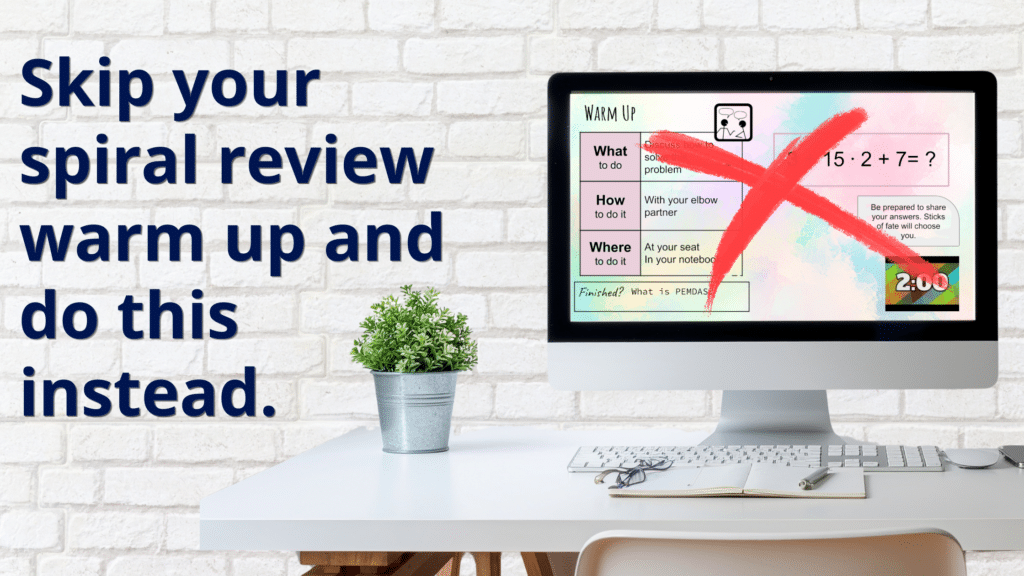
Your traditional spiral review warm ups are hurting your students’ math confidence. These math adjacent thinking tasks will change that.
Why Spiral Warm Ups Don’t Work
Most middle school math teachers are starting class the hard way.
Your typical warmup asks students to prove what they remember from yesterday or last year. While it’s important to use grade level content and to do spiral review, your warm up is not the place to do it.
For struggling students, it’s a reminder that they’re behind.
And students don’t learn well when they’re already feeling defeated. So what is the rest of class going to be like for them?
Our job as teachers is not just to teach math; it’s also to instill the confidence in our students that they can do the math. Confidence isn’t a bonus in math. It’s a prerequisite.
Warm Ups for Middle School Math that Work
Instead of starting with content… Start with thinking. I like to do this with what I call Math Adjacent Thinking Tasks.
Math adjacent means it uses the skills you need for math: reasoning, deduction, estimation, number sense, etc. It’s not directly tied to grade-level content but builds reasoning, communication, and creative thinking.
Here’s why I do these:
- It welcomes every learner, no matter their academic level.
- Encourages thinking over correctness.
- These can spark joy, discussion, and curiosity.
My Favorite Warm Ups for Middle School Math
The possibilities for these math adjacent tasks are endless. When creating or finding these problems, here’s what I look for:
- Have a low floor, high ceiling
- Require little to no prep
- Fosters community through discussion
- Fit beautifully into the first 5 minutes of math class
Here are my favorites that check all those boxes.
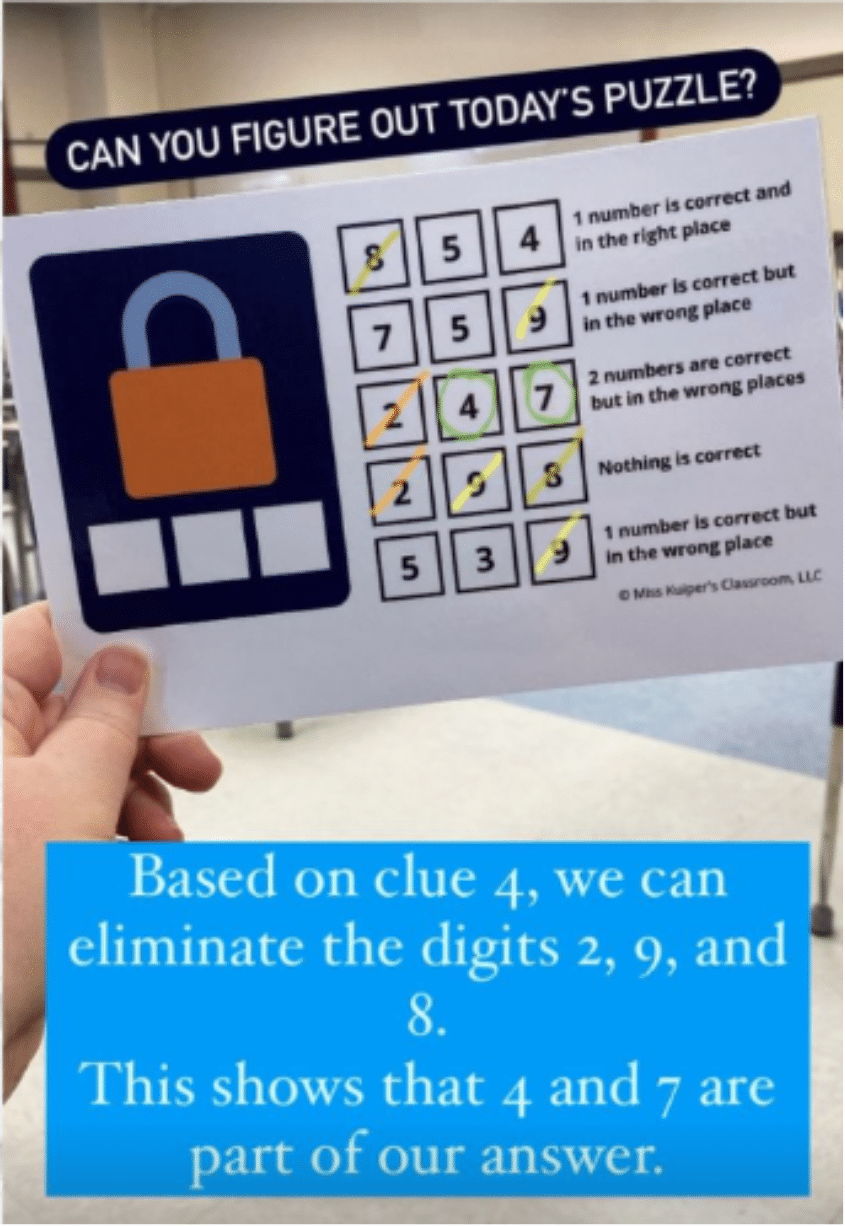
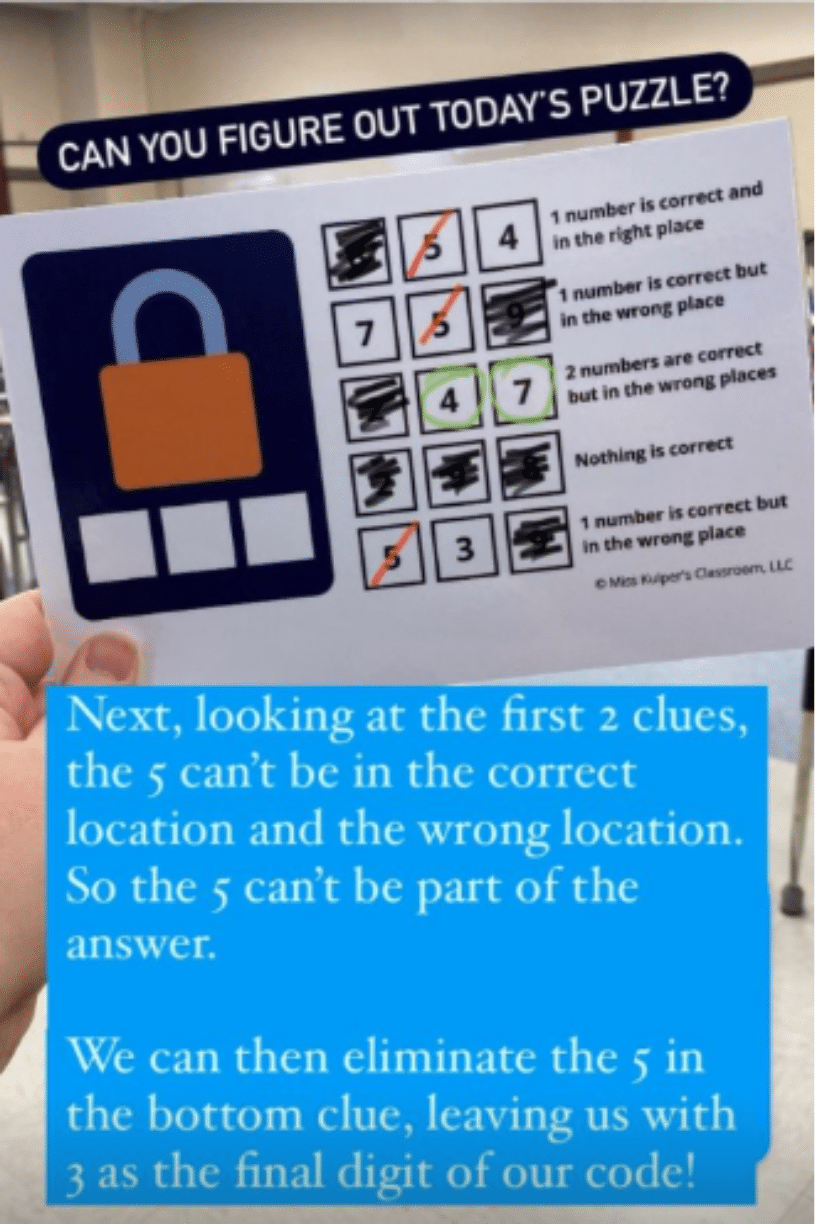
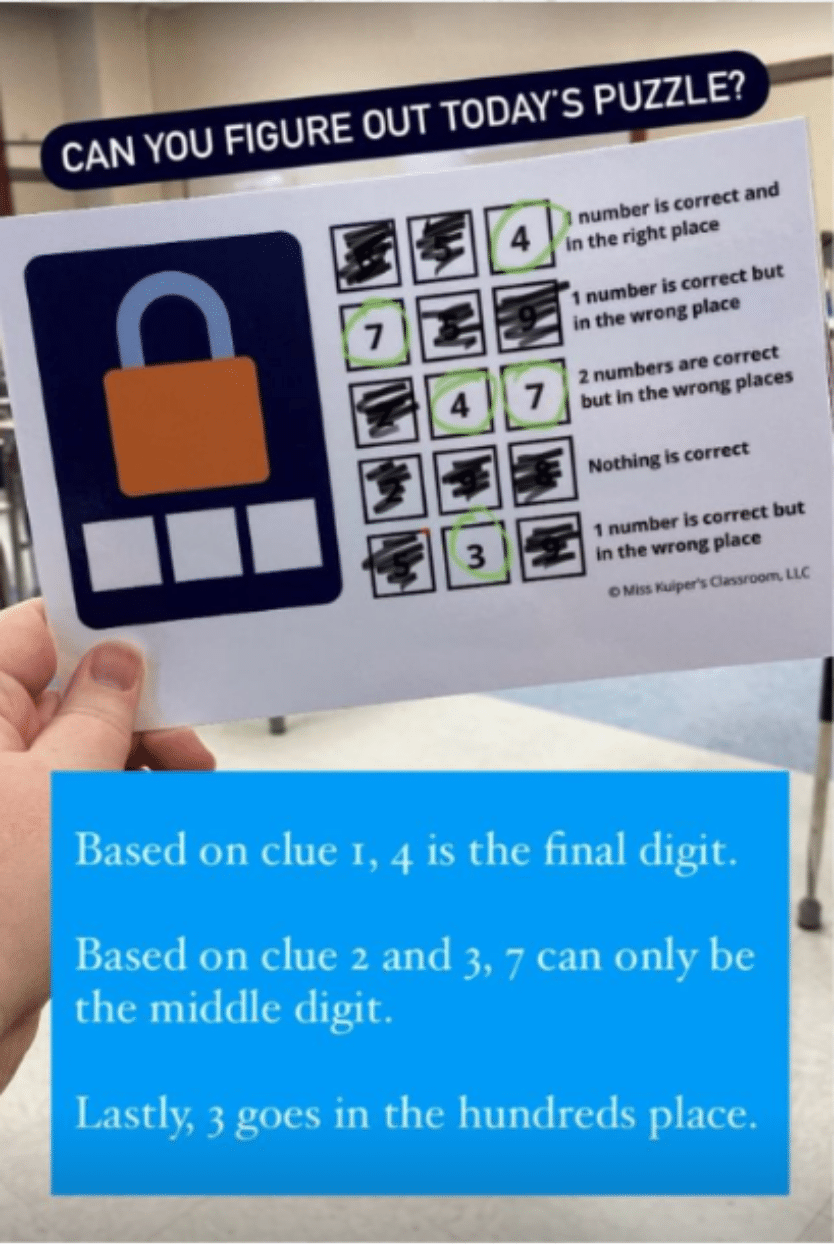
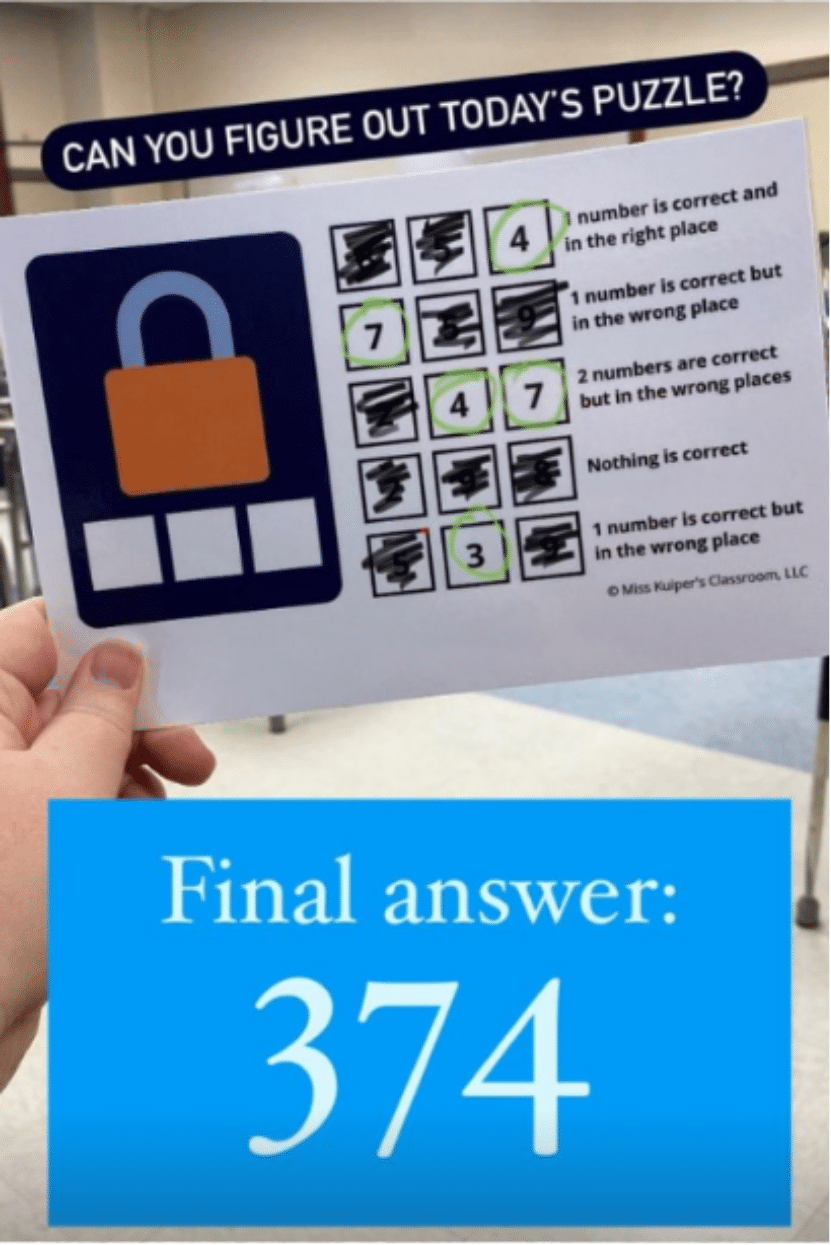
1. Crack the Code
Genuinely one of my favorites. Students feel like they are solving a puzzle, not using their deductive or reasoning skills.
These puzzles are like that old game Mastermind, but with numbers instead of colors.
2. Estimation Problems
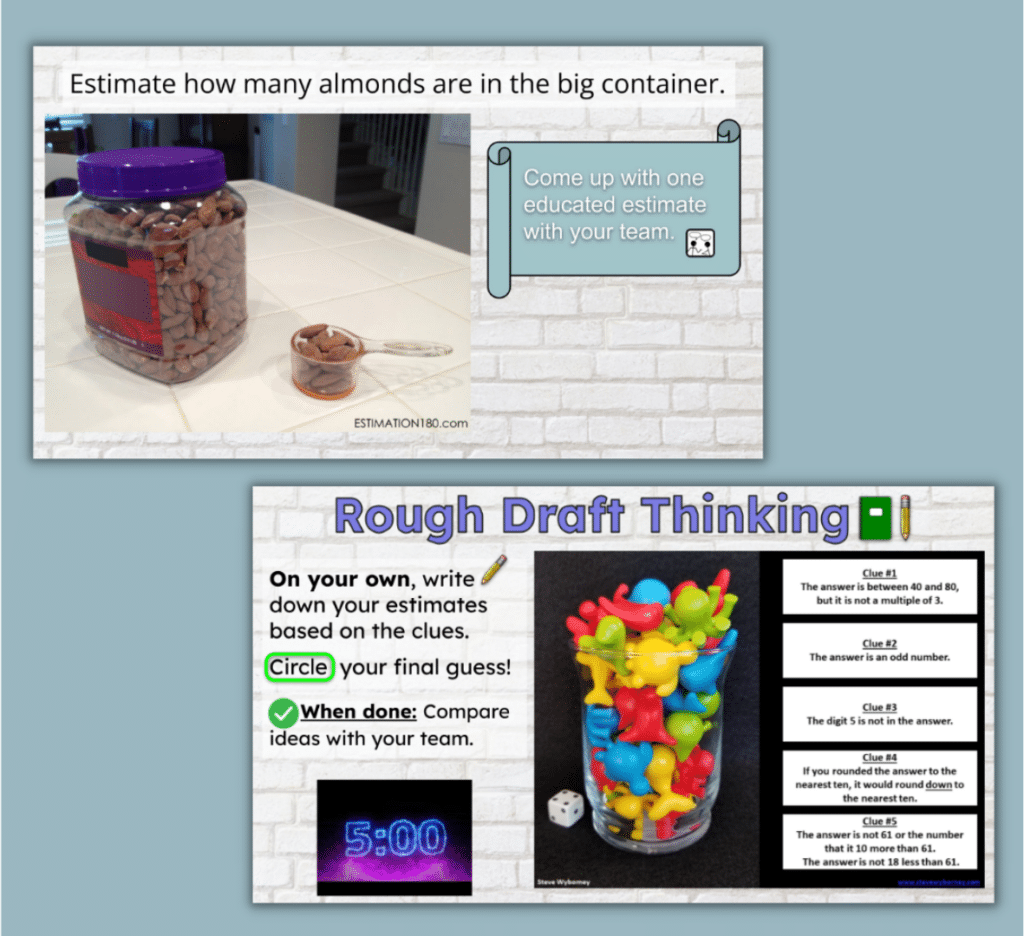
Do you know those baby shower or party games where you guess how many of something is in a jar? These estimations tasks are exactly like that!!
And if you are just starting to move on from your “typical” warm up, estimation problems are a great one to try! It doesn’t take a lot of effort for students to try.
My 2 favorite sites to get these from are
What’s cool about Estimation 180 is they build on each other. Looking at the Day 1 – 3 problems, the first one asks students to estimate the dude’s height. Then Day 2 is estimating the woman’s height in relation to the dude. And for Day 3, it’s estimating the kid’s height.
Several sets on Estimation 180 seamlessly build off of each other to help give a reference point for students.
Now for Esti-Mysteries…these are the next level. Because it’s not just about estimation, it’s about using your deductive reasoning skills with the clues you are given. PLUS it is differentiated by grade level and includes a PowerPoint version for them!
Both are truly amazing resources. And to be free??? Yup. Sign me up.
3. Which One Doesn’t Belong
If you want to increase student discussion, do these ones immediately. Not only do students come up with the WACKIEST responses, but because these are open-ended problems, there are endless answers.
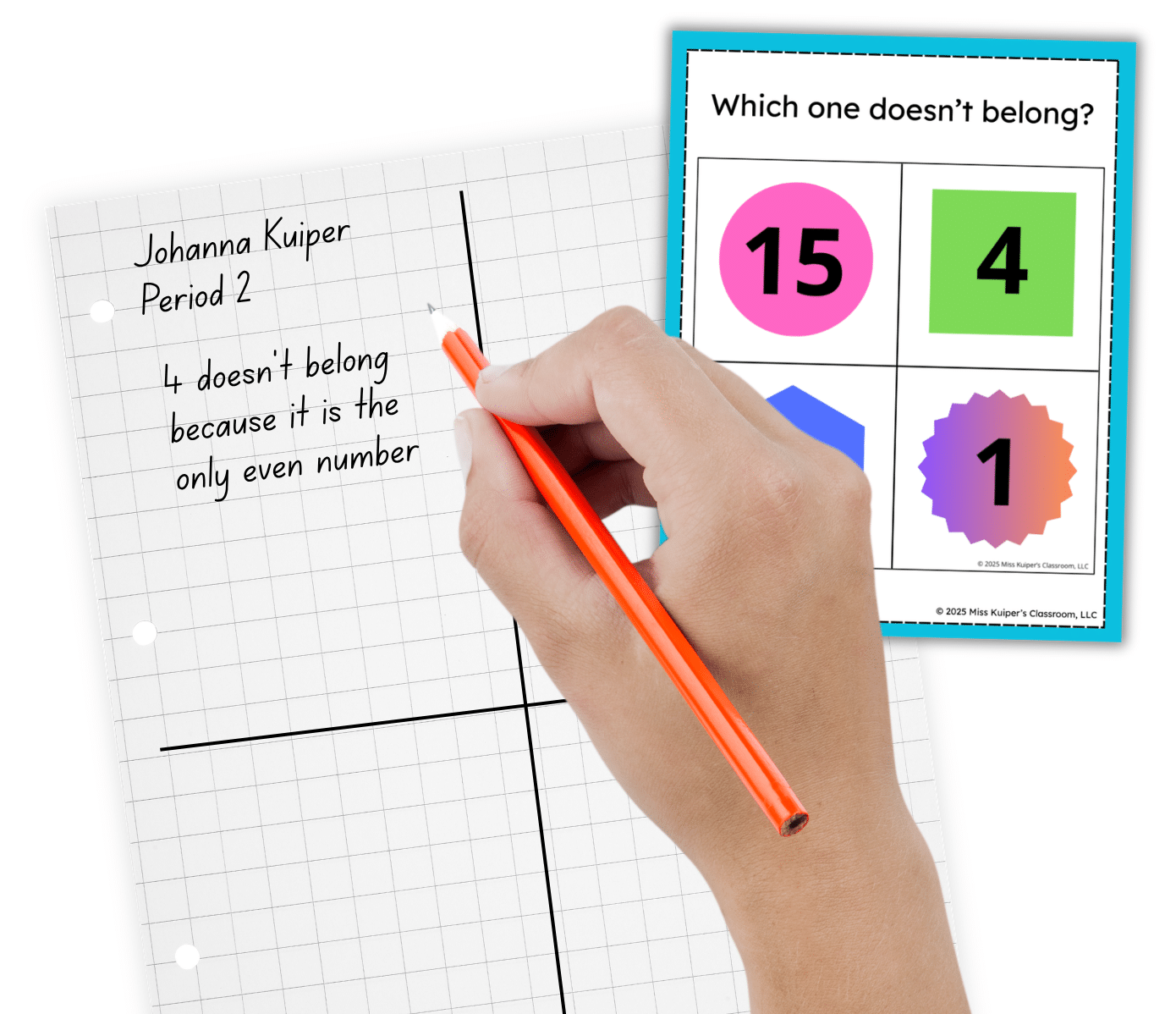
Take a look at these 4 numbers:
- 15 in a pink circle
- 4 in a green square
- 9 in a blue hexagon
- 1 in a ombre star
Of those, which doesn’t belong?
Well, 4 doesn’t belong because it’s the only even number. Or 9 doesn’t belong because it’s in the only primary color shape. Or 15 doesn’t belong because it’s a double-digit number OR it’s not a perfect square. OR 1 doesn’t belong because it’s the only prime number.
See? So many possibilities! And one of them wasn’t even math specific. That’s what makes these warm ups amazing for your students.
4. Emoji Math Problems
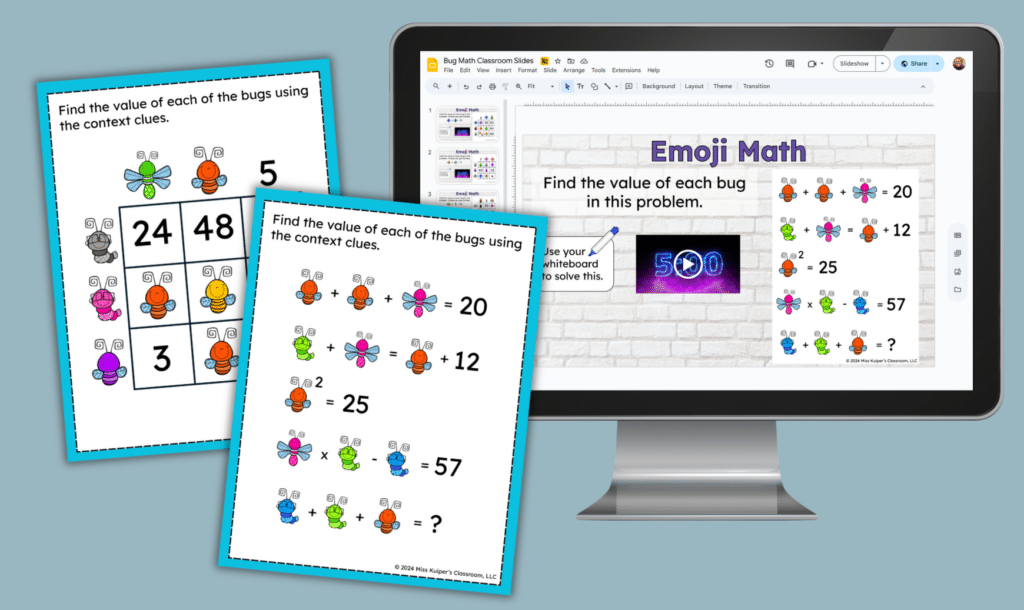
Soooooo…these do use some operational math skills…but in a fun way! And because of that, I would not make these the first ones you use with your students. Build your way up to involving more math with your warm ups.
What’s fun about these is you can customize the pictures to fit your students’ likes!
Quick note: When you first do these with students, let them know they don’t have to start with the first line or operation. It may not always give them specific values that they can use right away. It’s more of a “help narrow down the possibilities”.
How to Implement these in Your Math Classroom
Now let’s talk about the steps you can take to start using these in your classroom. It can feel like a stark difference for students to go from traditional math warm ups to math adjacent ones.
And it will take time to explain how each work. Don’t expect perfection the first time you do them. Students will be hesitant to get it “wrong”.
REMEMBER: The goal of all of these math adjacent warm ups is to build confidence in your students. If you have academically low students, the fear of getting something wrong can be overwhelming.
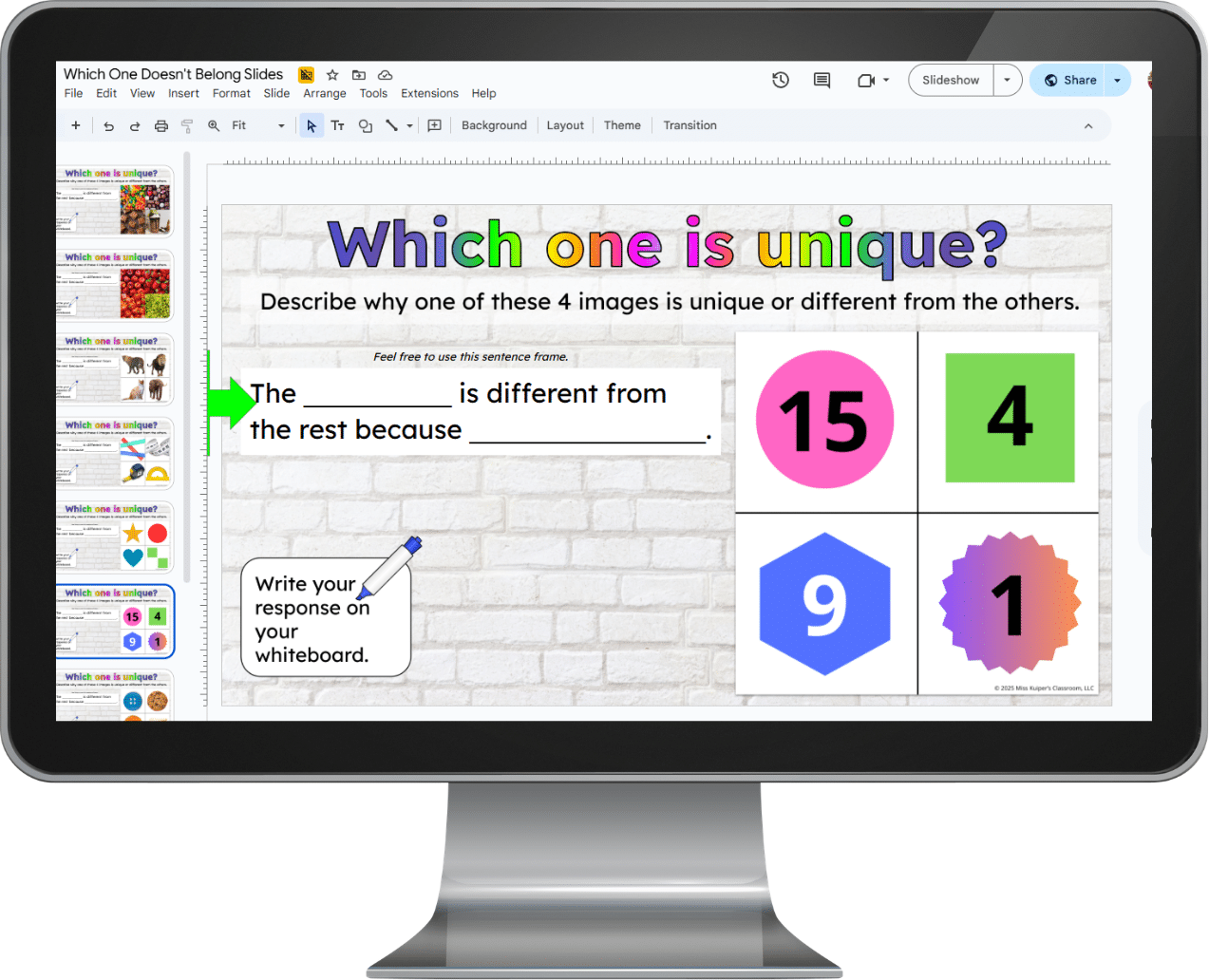
My suggestion is to start with the Which One Doesn’t Belong. It has the lowest point of entry. Here’s how I set it up:
First, I add the image to a slide. Then I create a sentence frame. YES, EVEN WITH MIDDLE AND HIGH SCHOOLERS. This helps decrease the resistance from students because it takes away the first step.
Next, use whiteboards or any easily erasable surface like laminated cardstock, dry erase sleeves, or even student desks! Why? Educational studies have shown that letting students do work on non-permanent surfaces drastically increases persistence, eagerness, and participation (source).
And then lastly, I have my students do these in teams. Each student shows their own work, but they can guide each other in how to complete it.
Want to learn more about effective transitions?
Listen to the podcast episode to hear all of the details spelled out!