Guided Notes have Failed our Students
When it comes to notes, the most standard two we see are guided notes and “copy me” notes. Copy me Notes are what I used to do for a long time. This is where we all get out our notebooks, I do a mix of direct instruction and writing worked examples, and students copy verbatim what I wrote down.
Guided notes are structured notes that have a framework for students to complete. The purpose of these is to help students learn to actively listen and participate.
What's Wrong with these Notes
Three things:
- There is no such thing as multi-tasking. It actually is our brains rapidly moving between activities rather than focusing on multiple things at once. So if students are writing, they aren’t listening. If they aren’t listening, they aren’t learning.
- Students will fall behind. Then they are no longer being able to work with us. They are copying “dead notes” with no context so when they look back at these notes, they may have no idea what it meant or how it will help them.
- These notes come from teacher brains. As teachers, we understand the scope of math. Kids are learning this for the first time. The notes need to be in their own vernacular or verbiage.
How to Make Notes More Effective
A lot of the time, notes happen concurrently with direct instruction. We need to separate them. When we are teaching, all students should be doing is watching and listening.
With that, we need to chunk the instruction. It may look like this:
- Give 3-5 minutes of a lesson.
- Have students turn and talk about what they just learned or saw. Summarize and recall.
- Students will jot down 1 or 2 things they want to remember.
- Pencils down.
- Repeat!
To clarify, what students are writing down is not formalized. It is just what they feel like they need to remember or a summary or what was taught over the past chunk. This will be much more effective for student learning.
WHY?
Recall help strengthen memory and improve long-term retention.
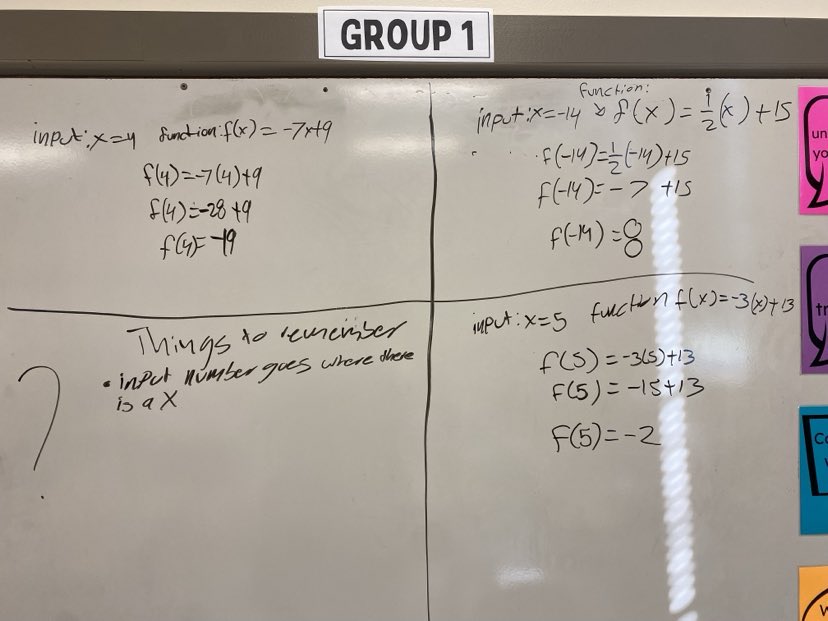
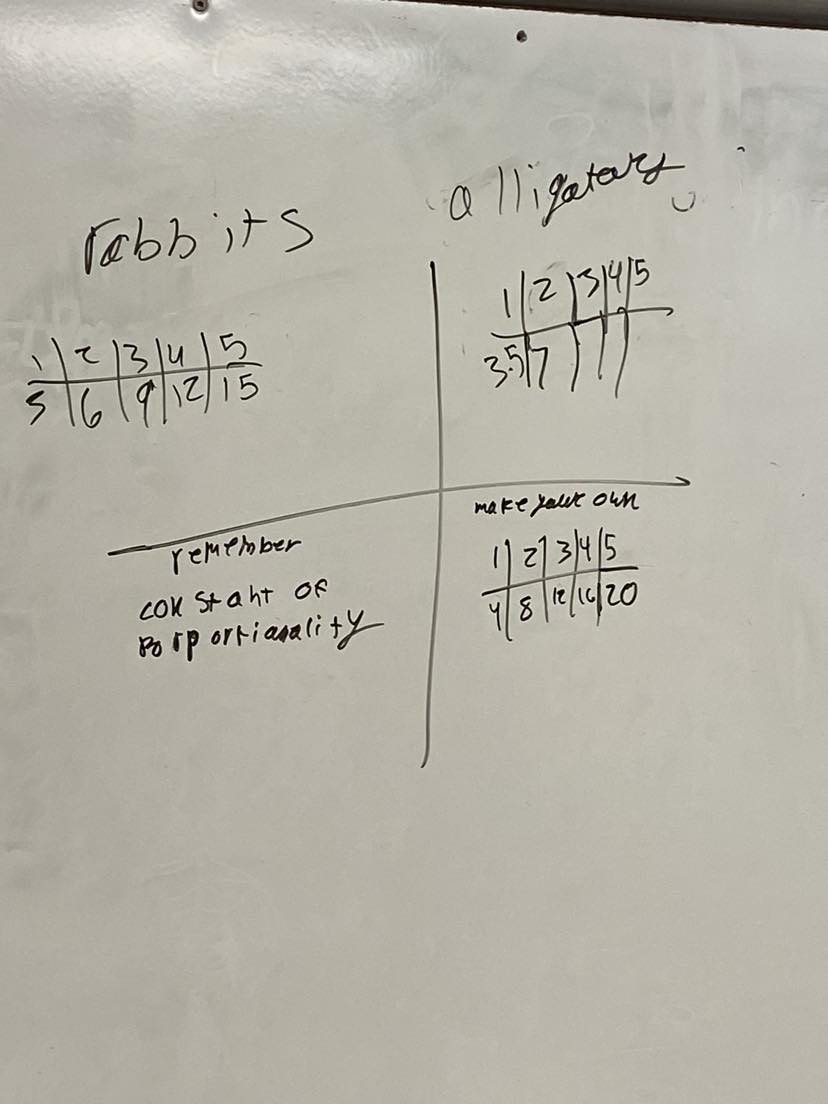
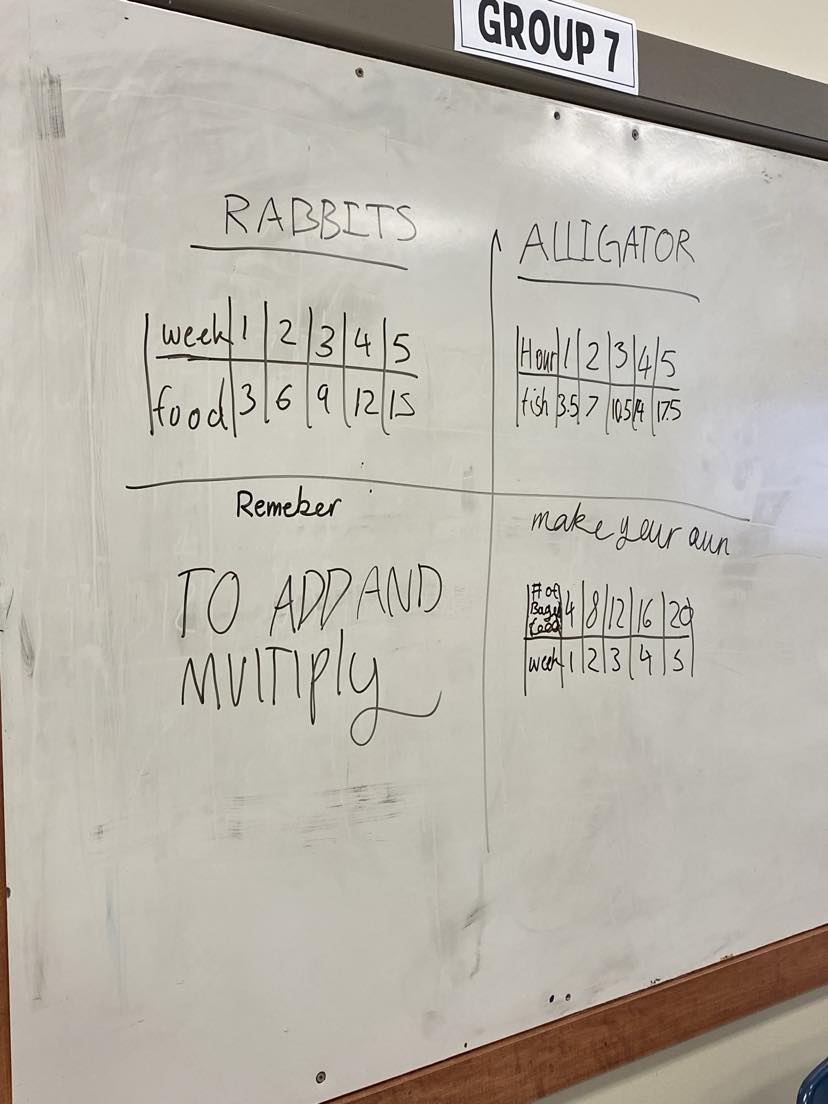
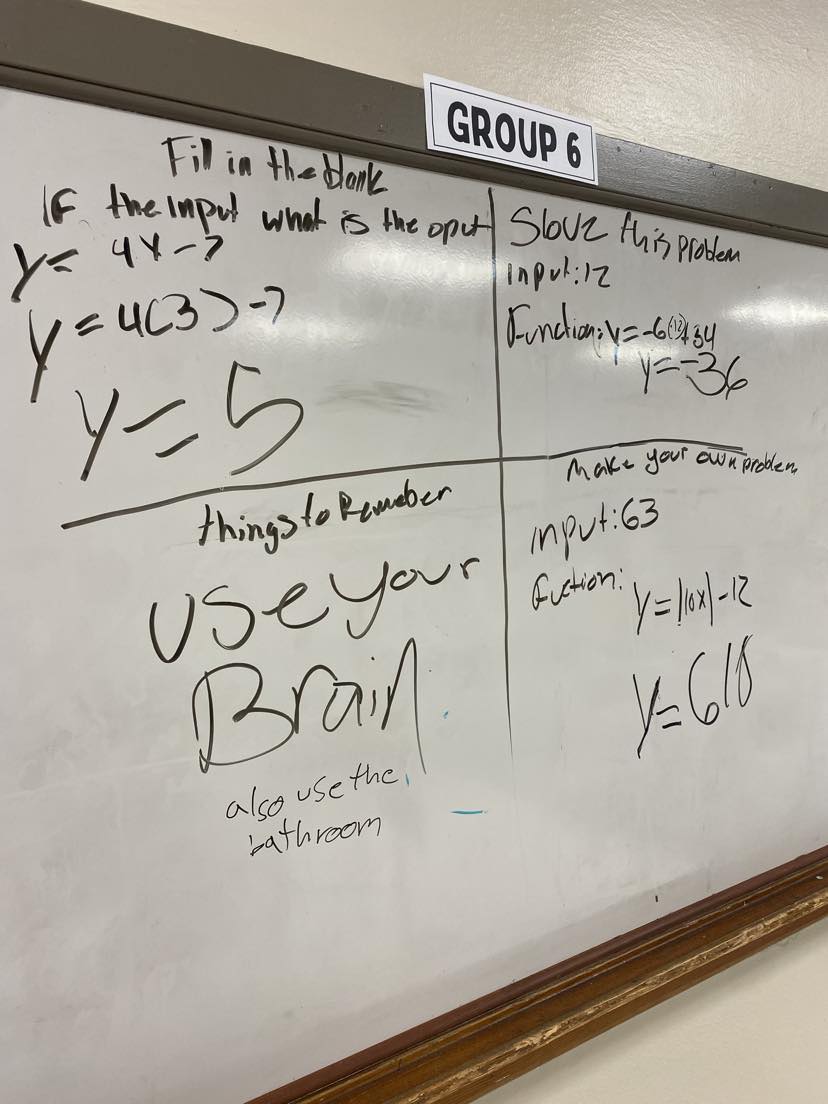
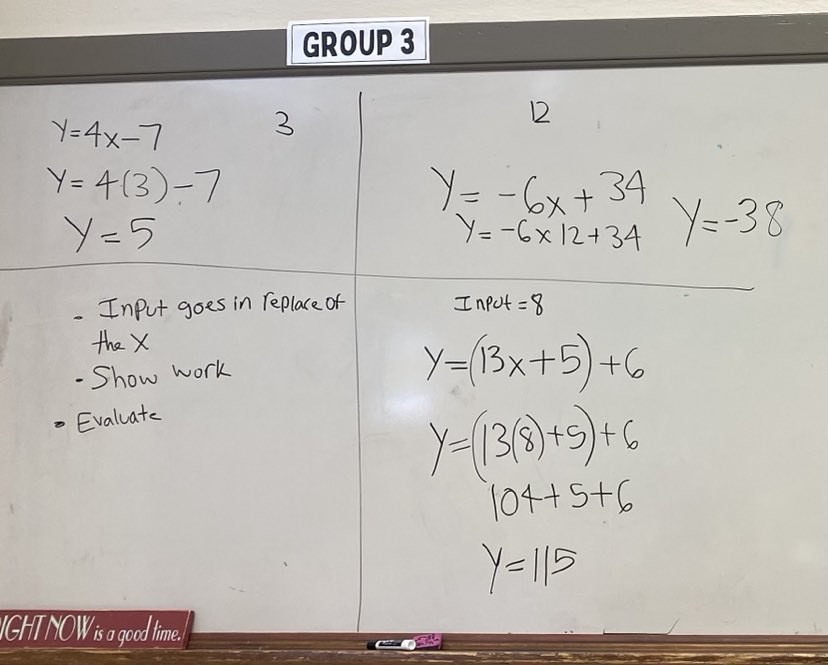
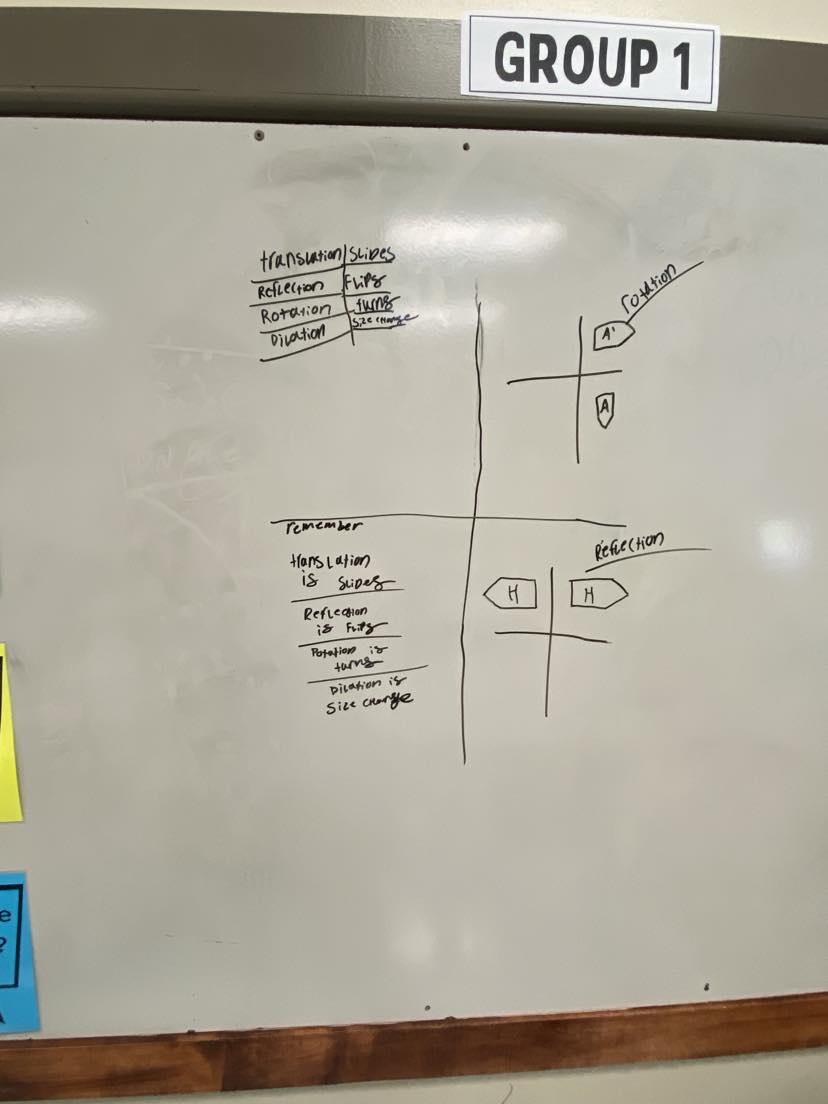
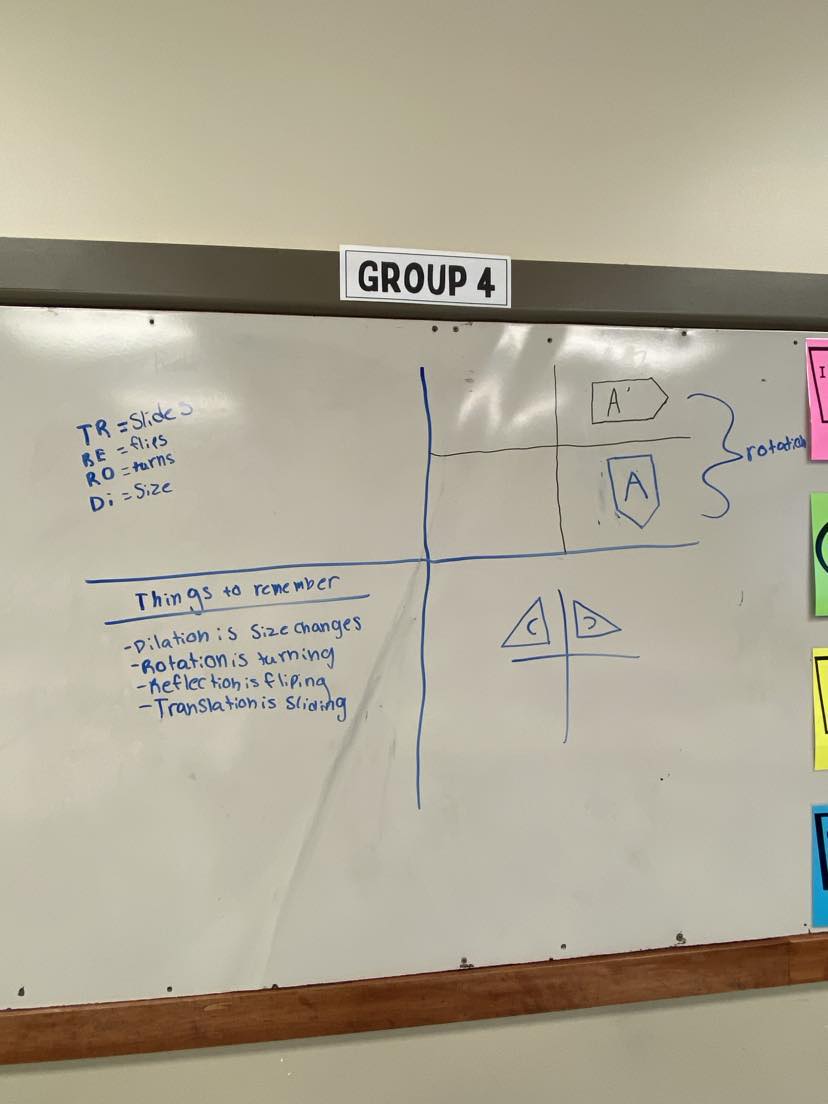
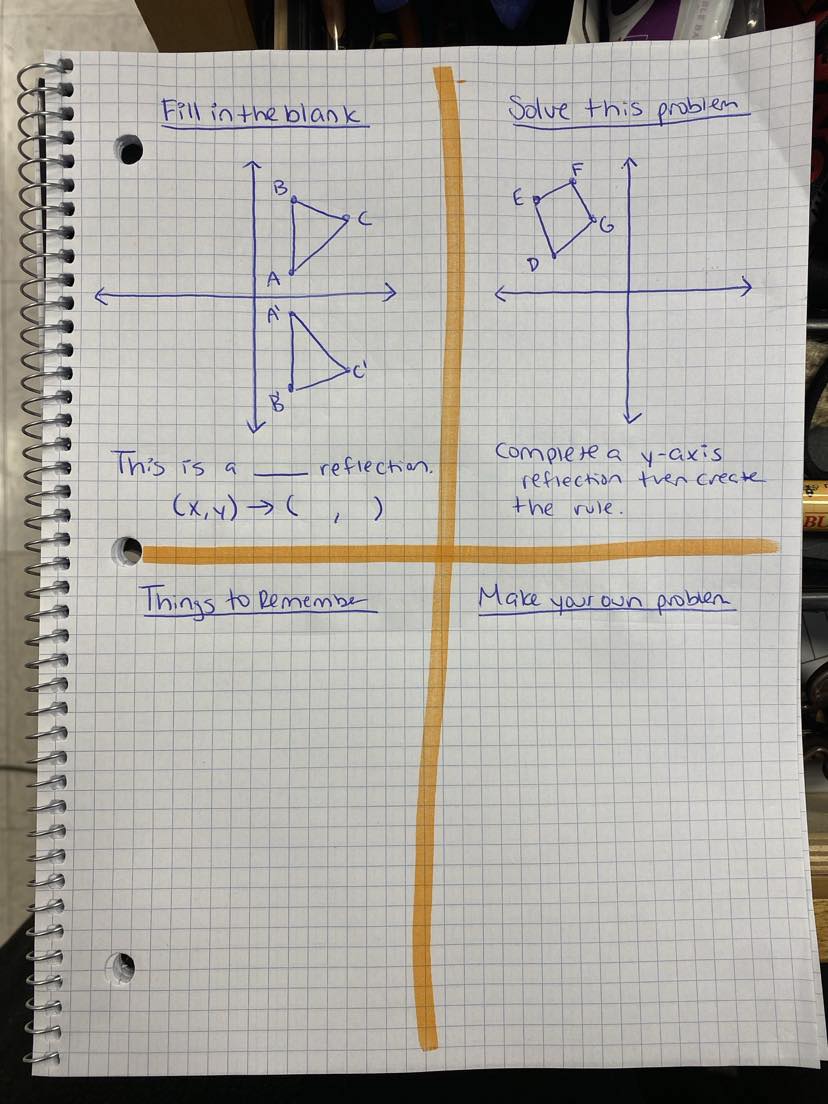
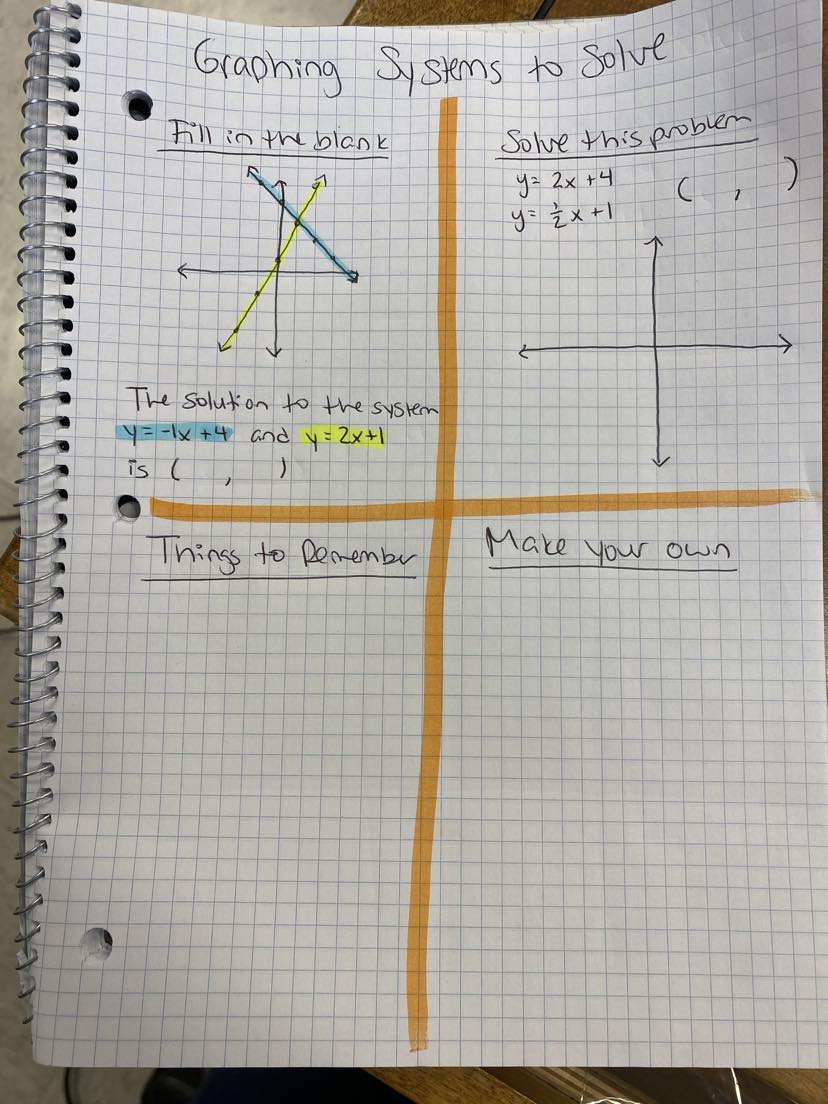
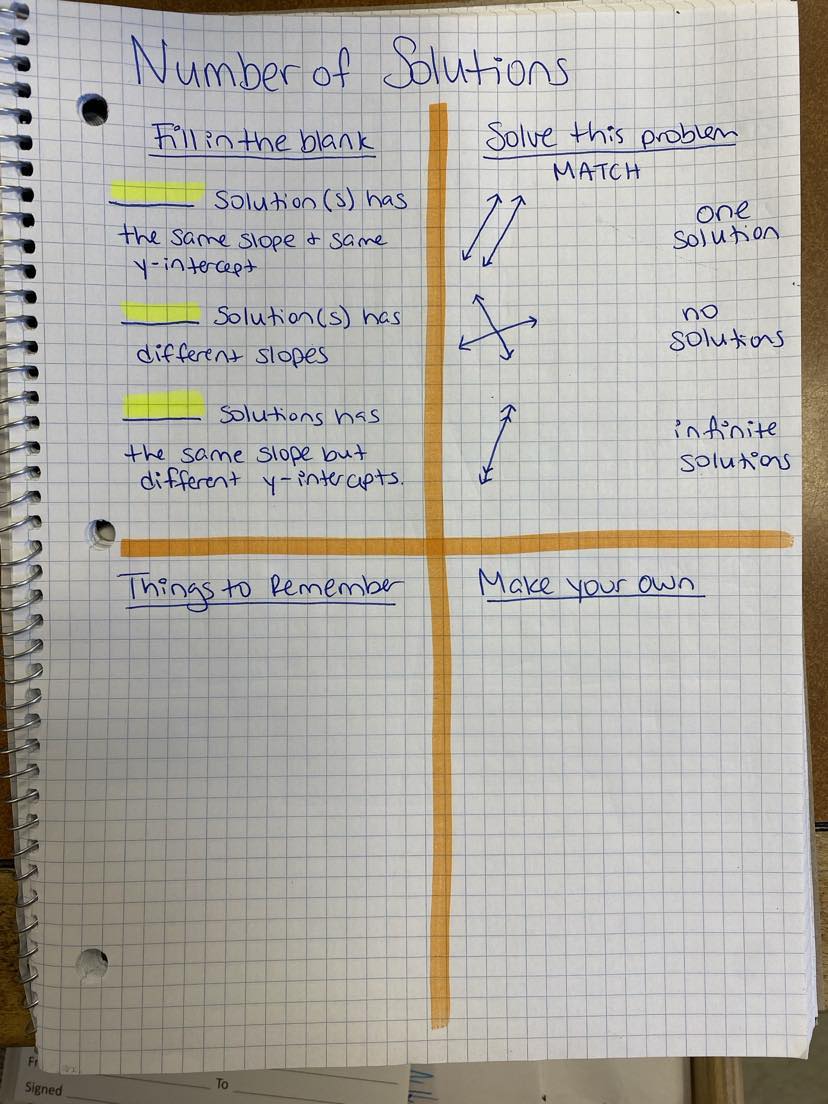
Here’s another way to make notes more effective: Peter Liljedahl’s Four Quadrant Notes.
- Quadrant 1: Fill in the blank (problem skeleton)
- Quadrant 2: Give them the task, have them turn it into a worked example. Showcase their learning for their future forgetful self
- Quadrant 3: Pick your own example
- Quadrant 4: Things to Remember
Teacher Examples of Notes
Student Examples of Notes