Who doesn’t love writing on whiteboards?
I still remember being a kid, hanging out in my mom’s classroom during the summer while she got everything ready for the school year. My sister and I would grab the markers and just go to town drawing all over the whiteboards. It felt carefree. No pressure. No stress. And if we messed up? We erased it and kept going.
That feeling…that low-pressure, try-anything energy…is exactly what many of our students are missing in math class.
Whiteboards can help bring it back.
Why Whiteboards Matter in Math Class
Let’s talk about something we all see in our students: apathy.
Students who won’t try. Students who shut down before they even start. Students who would rather do nothing than risk being wrong.
A lot of that comes down to fear.
→ Fear of making mistakes.
→ Fear of being seen making mistakes.
→ Fear of getting it wrong the first time.
Whiteboards quietly remove that fear.
When a student writes on a whiteboard, there’s no permanent record of being wrong. There are no smudged eraser marks and no crossed-out answers that point out “I WAS WRONG THE FIRST TIME”
That simple shift creates a low-risk environment. And sometimes, that’s the difference between engagement and total shutdown.
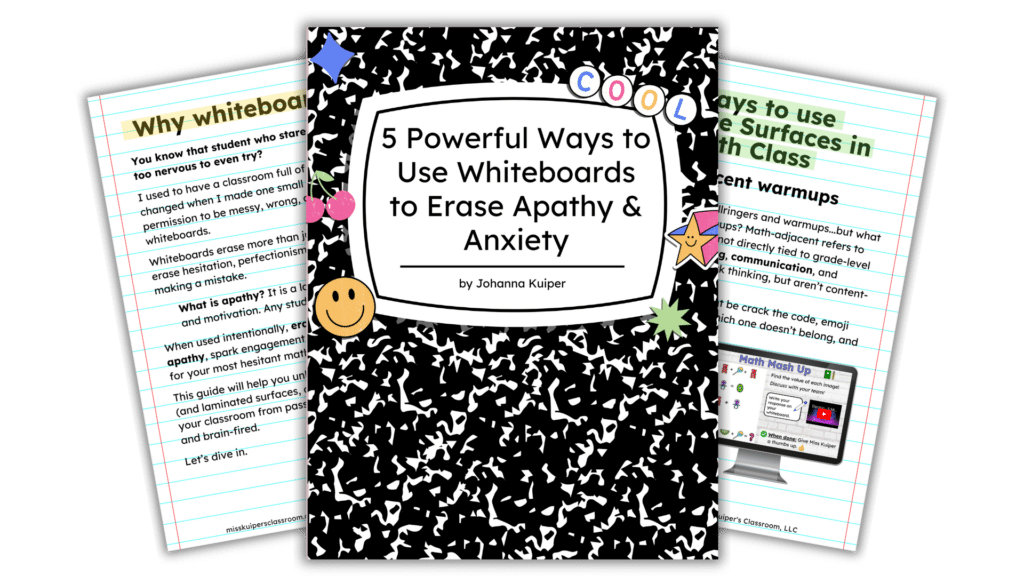
Download my free guide for 5 ways to use whiteboards!
Turn your whiteboards into one of the most powerful tools in your classroom -not just for review games, but for sparking engagement, building confidence, and making math feel doable again.
Let’s Be Honest… Whiteboards Are Just More Fun
There’s also something else at play here: novelty and enjoyment.
Kids like whiteboards.
Give a student a worksheet and a pencil? Meh.
Give that same student a marker and a whiteboard? Suddenly they’re interested.
So instead of fighting for engagement, we can leverage it.
The goal isn’t just “use whiteboards because they’re fun.” It’s: use that fun as an entry point into meaningful math thinking.
A Routine that Changes Whiteboard Management
Before we even get into strategies, here’s one small move that makes a big difference.
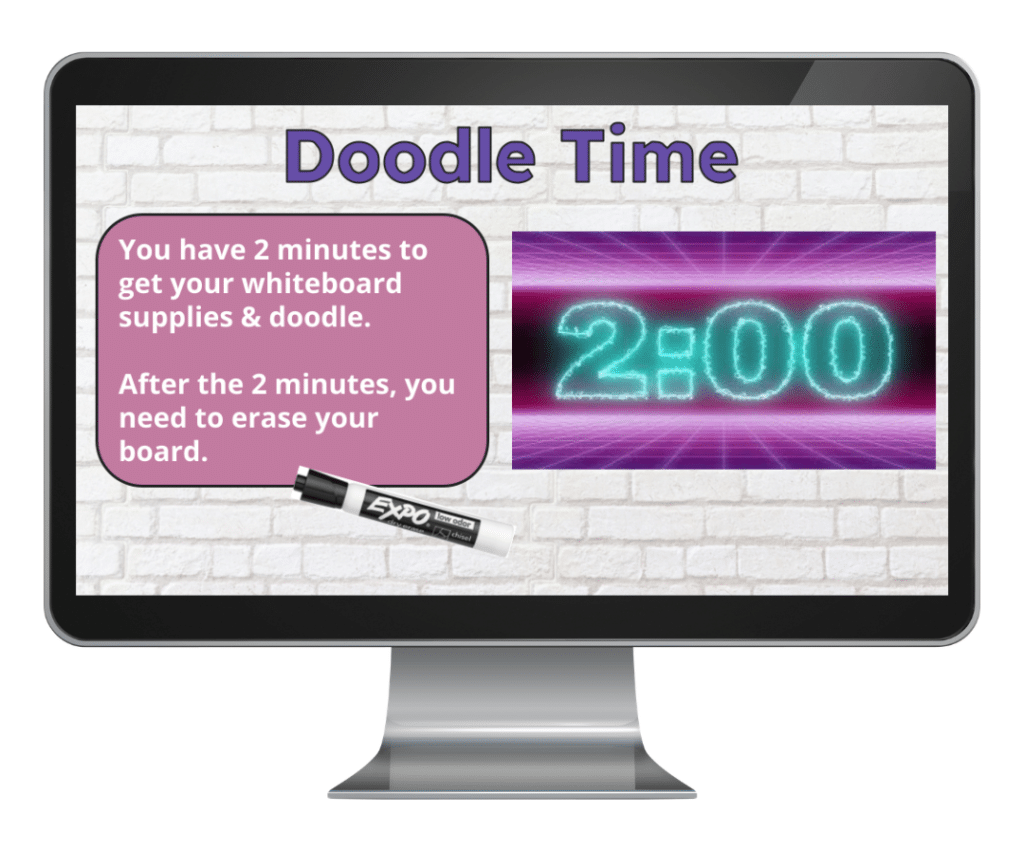
When students grab their whiteboards, give them 2 minutes of “doodle time.”
They can draw anything (school appropriate, of course). Then, when time’s up, boards are erased, and it’s time for math.
Why this works:
- It motivates quick transitions (faster setup = more doodle time)
- It sets a clear boundary (this is the only time for drawing)
- It honors that natural desire to draw on whiteboards!
It’s a small routine with big payoff.
If you read through my Supply Round Up post, Doodle Time would be the perfect thing to pair with it!
Students are incentivized to get their whiteboard and marker quicker because it means more time to doodle.
If you had an extra minute or two to spare, you could quickly have students show off their creations! Or give students a prompt if they are unsure what to doodle.
Again, it’s a small, easy routine that will pay off big time.
Want to learn more about using whiteboards?
Check out my podcast episode where I talk about all the ways I use whiteboards with my 8th graders!